Roots & Wings
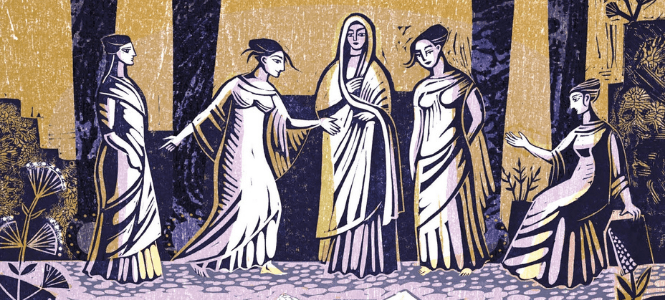
Pat Barker’s female protagonist Briseis in The Women of Troy (2021) has to be one of the most understated, measured and omniscient narrators I have come across in a while – which is why the following is my favourite excerpt from the novel:
Then — and now — people seem to take it for granted that I loved Achilles. Why wouldn’t I? I had the fastest, strongest, bravest, most beautiful man of his generation in my bed — how could I not love him?
He killed my brothers.
We women are peculiar creatures. We tend not to love those who murder our families.
Pat Barker throws in unexpected humour during the most bleak of internal narrative moments, adding humour to Briseis’s situation as a woman made captive for her position as a royal, and beautiful, Trojan woman.
Tongue-in-cheek, Briseis’s stinging line — ‘We tend not to love those who murder our families’ — proves microcosmic of the way in which Barker enters the inner minds of the relegated and ultimately dehumanised Trojan women, kept as sexual prizes for the Greek army following the Trojan war (c.1194-1184 BCE).
Left stranded on the captivated beach of Troy, the Greek armies wait for the wind to drop and allow them to set sail back home. All characters but the women wonder why the ancient gods are keeping them ransom. Briseis, however, continually reminds her readers that Little Ajax’s rape of Cassandra — one of countless rapes and murders of Trojan women — in the temple of Athena is surely enough to explain their wrath:
Looking around the circle, I saw that some gods — Athena, in particular — were doing better than others and I realized this was a visual guide to what ordinary Greek fighters were thinking. Why are we being kept here on this bloody awful beach? Which god have we offended? Answer — or at least best guess: Athena. And why Athena? Because it was in her temple that Cassandra had been raped, and the rapist, Ajax the Lesser — Little Ajax — had not been punished as he ought to have been.
Briseis stands apart from these ‘ordinary’ — and indeed ignorant — Greek fighters, whose thoughts as described by Briseis only become more reprehensible as our narrator adds:
Of course, it wasn’t the rape that bothered them; it was the desecration of the temple. That was a violation Athena might well be inclined to revenge.
But no one listens to women, who are thought so invaluable, incapable and inferior that they are not considered Trojan people at all. Briseis is passed from one man to the next, even before the novel begins — first, her husband Mynes (not mentioned in Barker’s novel), then Achilles (who sacks Briseis’s home city, Lyrnessus) and then to Agamemnon. In outrage, Achilles refuses to fight Agamemnon’s war on the Trojans until he returns Briseis. He does so, claiming not to have slept with Briseis – although we learn in the novel that Agamemnon slept with her twice. (Consent is, perhaps unsurprisingly, out of the picture in this world of massacre and destruction.)
But Barker’s The Women of Troy is set following the sack of Troy, where Briseis must keep the unborn baby of the now dead hero Achilles safe, under a new marriage to Alcimus:
The crux was that Alcimus believed — or rather assumed — that I’d loved Achilles, and still loved him. He certainly wasn’t alone in that belief.
Even after reading Pat Barker’s second novel in the Troy series, the first titled ‘Silence of the Girls’ (2018), I was unsure how to pronounce Briseis, Pyrrhus and even Odysseus. My feelings of mistrust when the topic of Classical Literature came up at university, remind me of Alan Bennett’s writing on poetry:
When I was young, I used to feel that literature was a club of which I would never be a proper member — as a reader, let alone a writer. It wasn’t that I didn’t read books, or even the “right” books, but I always felt that the ones I read couldn’t be literature, if only because I had read them. It was the books I couldn’t get into (and these included most poetry) that constituted literature — or, rather, Literature.
Though Alan Bennett is discussing renowned poets when he mentions he always felt excluded from the literary ‘club’, I think the same applies to Classical Literature — which feels like a stamp of the ultimate literary status. Of course, this comes from the way in which English as a subject was previously deemed inferior to Classics. English as a degree was established as late as 1903; Classics has been a mainstream part of elite education for over 900 years.
Pat Barker’s integration of swearing, at times bawdy humour, and littered yet fluent descriptions of herbal remedies and classical burial rituals create a cocktail of history which is surprisingly easy to read. The novel is not just for Classical scholars, but rather those who have little knowledge of Troy, ancient heroes and classical gods.
I found it unsurprising to read on the blurb that Pat Barker begun her writing career under the supervision of Angela Carter. The way in which Barker extrapolates on moments of privacy between suppressed and silenced women feels hauntingly close to Carter’s adaptation of the Grimm’s Tales in The Bloody Chamber (1979). Both authors reap literary reward from the silence of the female and domestic spheres — whether creeping along forbidden corridors in The Bloody Chamber or watching the silent rocking of an empty cradle, waiting for another Greek hero to fill it, in The Women of Troy.
Briseis is often left alone with her grief; wondering about her future beyond carrying war-hero Achilles’s unborn child. Keeping herself busy by pacing up and down her hut in the camp, or carding wool to pass the time, one of the most chilling passages of the novel is when Briseis scrabbles to explain why the cradle of Andromache’s murdered baby starts to rock during the quietest of nights:
I heard a new sound: a knocking I’d not noticed before. Dragging myself awake, I opened my eyes and saw that the cradle had begun to rock. No human hand had touched it and yet there it was, creaking away — moving — inching its way across the floor.
In Briseis’s world, remnants of grief inch their way towards her across the hut floor, as much as she tries to distract herself by mothering the other Trojan women cast as the slaves of the victorious murderer and Greek hero, Pyrrhus.
The ambiguity with which the novel ends begs the question where Briseis will live beyond the much anticipated journey back to Greece. I imagine her small acts of defiance against the Trojan army — just like her forbidden walk to the massacred and unburied body of dead King Priam — to mirror Angela Carter’s wandering, unnamed and youthful female character in The Bloody Chamber, who discovers the truth about her own murderous husband through his absence; and silence:
It was now very late and the castle was adrift, as far as it could go from the land, in the middle of the silent ocean where, at my orders, it floated, like a garland of light. And all silent, all still, but for the murmuring of the waves.
I felt no fear, no intimidation of dread. Now I walked as firmly as I had done in my mother’s house.
Both Barker and Carter rewrite history in ways which exceed ‘herstory’, weaving together complex narrative webs that hint — in turn — at the complexity of the female experience across silent corridors, cradles and camps from Briseis’s ancient world to Carter’s Gothic castles. Perhaps for Briseis to embody the same firm and fearless steps as Carter’s protagonist, Briseis too must escape to ‘the middle of the silent ocean’ ‘like a garland of light’, reunited with the ‘murmuring of the waves’ on her sojourn back to her Greek homeland.
Roots & Wings
Further reading:
Alan Bennett, Six Poets: Hardy to Larkin
Pat Barker, The Silence of the Girls and The Women of Troy
Angela Carter, The Bloody Chamber and Other Stories
 Roots & Wings